Artificial Intelligence has been in the news a lot lately, from ominous warning of its future implications from academic leaders like Stephen Hawkings and Elon Musk to panic around, Facebook AI developing its language. And according to a recent report from Mc Kinsey Global Institute, roughly half of today’s work activities could be automated by 2055 Is the AI apocalypse near?
Movies like the Terminator franchise and the Matrix have long portrayed dystopian futures where computers develop superhuman intelligence and destroy the human race — and some thinkers think this kind of scenario is a real danger.
Thinkers like Nick Bostrom who is an Oxford philosopher and Robin Hanson, an economist at George Mason University, overestimate the likelihood
that we’ll have computers as smart as human beings and exaggerate the danger that such computers would pose to the human race. In reality, the development of intelligent machines is likely to be a slow and gradual process, and computers with superhuman intelligence, if they ever exist, will need us at least as much as we need them.
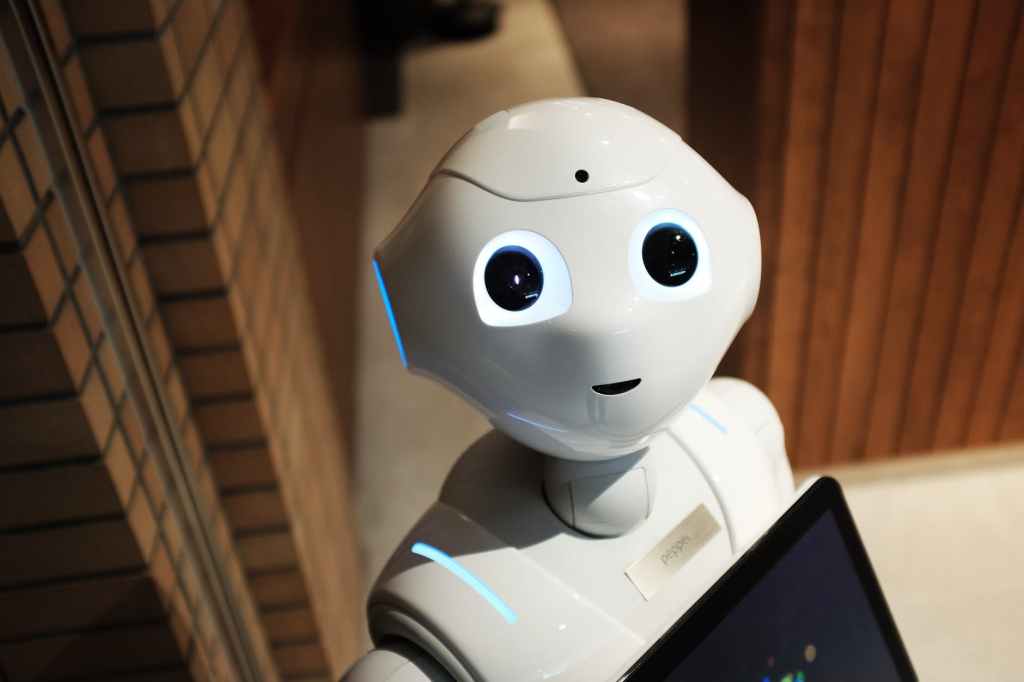
Imagine taking a brilliant English speaker who has never spoken a word of Chinese, locking her in a room with an enormous stack of books about the Chinese language, and asking her to become fluent in speaking Chinese. No matter how smart she is, how long she studies, and how many textbooks she has, she’s not going to be able to learn enough to pass herself off as a native Chinese speaker. That’s because an essential part of becoming fluent in a language is interacting with other fluent speakers. Talking to natives is the only way to learn local slang, discover subtle shades in the meanings of words.
A machine trying to develop human-level intelligence faces a much more severe version of this same problem. A computer program has never grown up in a human family, fallen in love, been cold, hungry or tired, and so forth. In short, they lack a huge amount of context that allows human beings to relate naturally to one another.
Let me tell you all about European Artificial Intelligence leadership, it is the path for an integrated vision. As a general-purpose technology, Artificial Intelligence is expected to bring about far-reaching effects on business and society.
AI will bring forth a utopian future, in which the human brain’s full potential will be opened up, giving us the ability to discover new cures, new sources of energy, and new solutions to all of humanity’s problems including the “eradication of disease and poverty.”

Machines are going to depend on humans for supplies, repairs, and other maintenance. A smart computer that wiped out the human race would be committing suicide.
So the first super-intelligent computer might be able to earn a lot of money, but its advantage will be fleeting.
Humanity should not fear the growth of Artificial Intelligence as humans like to learn in groups and they like to learn from other people. Robots will never be able to match humans on that count. Another factor that is likely to be irreplaceable is the ability to inspire.
I want to end my words by just saying:
“I imagine a world in which AI is going to make us work more productively, live longer, and have cleaner energy.
Thank you
By Aishwarya Gupta

 Let's Make A Difference